The Architecture of Resilience: How South Africa’s Gymnastics Trio Is Redefining Legacy Ahead of Rotterdam

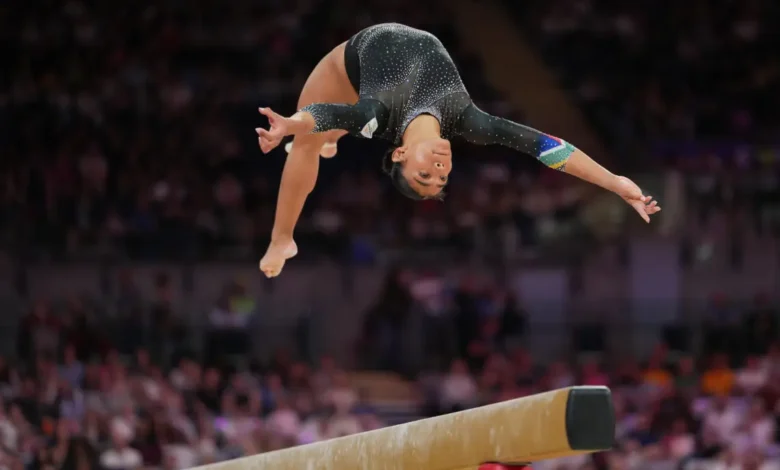
South African gymnasts Caitlin Rooskrantz, Naveen Daries and Zelmé Daries are preparing to take centre stage at the 2026 World Artistic Gymnastics Championships in Rotterdam, carrying the hopes of a nation and a story shaped by perseverance, experience and ambition.
As the world’s best artistic gymnasts prepare to compete in Rotterdam, the South African trio of Caitlin Rooskrantz, Naveen Daries and Zelmé Daries will arrive with more than individual ambitions. Their journey represents the resilience of a programme determined to strengthen its position on the international gymnastics stage.
The 2026 World Artistic Gymnastics Championships are scheduled to take place at Rotterdam Ahoy in the Netherlands from 17 to 25 October. For South Africa, the competition offers another opportunity to demonstrate the progress of its women’s artistic gymnastics programme against elite international opposition. <Cite refs={[“turn953654search3″,”turn953654search1”]}/>
The trio brings together three different stages of an athlete’s development: established experience, competitive longevity and emerging potential. Together, they represent a growing generation of South African gymnasts determined to leave a lasting impression.
Naveen Daries: A Symbol of Longevity
Naveen Daries has built an international career that demonstrates the value of consistency and persistence in one of gymnastics’ most demanding disciplines.
Having represented South Africa at major international competitions, including the Tokyo 2020 Olympic Games, Daries has become an important figure in the country’s women’s artistic gymnastics programme.
Her experience will be particularly valuable in Rotterdam, where the smallest technical errors can make a significant difference to an athlete’s final score. Years of competing against international opposition have given her opportunities to develop the composure required at the highest level.
Her progress on the uneven bars has also highlighted her continued development. Rather than relying solely on experience, Daries continues to pursue improvements in her performances and technical execution.
As she prepares for another World Championships appearance, her journey serves as an example for younger gymnasts seeking to build sustainable careers in the sport.
Caitlin Rooskrantz: Experience Meets Determination
Few names carry as much significance for South African women’s gymnastics as Caitlin Rooskrantz.
A two-time Olympian who represented the country at Tokyo 2020 and Paris 2024, Rooskrantz has helped raise the profile of South African gymnastics through her performances on the international stage.
Her achievements include a bronze medal on the uneven bars at the 2022 Commonwealth Games, South Africa’s first gymnastics medal at the competition since 2010. She has also earned African championship honours and international World Cup success. <Cite refs={[“turn953654search1″,”turn953654search9”]}/>
However, her journey has also involved the challenges that accompany elite sport, including injury management and the pressure to maintain performance standards.
Her preparation for Rotterdam represents another chapter in a career built around determination, technical discipline and the pursuit of excellence.
With experience from multiple Olympic and World Championship campaigns, Rooskrantz brings valuable leadership to the South African contingent. Her presence can help set the competitive standard while reinforcing the importance of patience and preparation.
Zelmé Daries: The Next Generation Steps Forward
While Rooskrantz and Naveen Daries provide international experience, Zelmé Daries represents the continued development of South Africa’s emerging gymnastics talent.
The younger Daries has steadily established herself as a competitive senior gymnast, recording encouraging performances at continental and international competitions.
Her achievements at the 2026 African Artistic Gymnastics Championships in Yaoundé, Cameroon, included an individual all-around bronze medal and participation in South Africa’s silver-medal-winning senior women’s team. Those results strengthened her standing as one of the country’s promising athletes. <Cite refs={[“turn953654search1″,”turn953654search2”]}/>
Zelmé’s development illustrates the importance of providing younger gymnasts with opportunities to compete alongside established international performers.
At a World Championships, every routine presents a fresh challenge. The ability to manage pressure, maintain concentration and recover from mistakes can be just as important as technical ability.
For Zelmé, Rotterdam offers another opportunity to gain experience and demonstrate how far she has progressed.
Resilience Forged Through Difficult Challenges
South Africa’s preparations for major competitions have not always been straightforward. Injuries, illness and the demands of international travel can disrupt training schedules and affect athletes’ readiness.
The country’s recent international campaigns have nevertheless demonstrated the determination of its gymnasts to remain competitive despite setbacks.
At the 2026 African Championships, South Africa secured silver in the senior women’s team event, providing an important foundation ahead of subsequent international competitions. The team’s performances also reflected the value of collective preparation and the contribution of its coaching staff. <Cite refs={[“turn953654search1″,”turn953654search2”]}/>
For Rooskrantz, Naveen Daries and Zelmé Daries, resilience means more than returning to competition after difficult periods. It also involves maintaining high standards, adapting to changing circumstances and continuing to pursue improvement.
These qualities will be important as they face the demands of a World Championships environment, where athletes must deliver under intense scrutiny.
Rotterdam Offers a New Test
The World Artistic Gymnastics Championships bring together competitors from across the globe, creating an environment in which precision, consistency and execution are essential.
South Africa’s representatives will need to demonstrate their abilities across the apparatus while adapting to the pressure of competing against some of the world’s leading gymnasts.
The experience of Rooskrantz and Naveen Daries could prove valuable in navigating the demands of the competition, while Zelmé’s continued development provides another reason for South African supporters to follow the team’s progress.
Although expectations must be balanced against the strength of the international field, the opportunity to compete at this level remains significant for the athletes and the wider gymnastics programme.
Building a Legacy Beyond Medals
For South African gymnastics, the significance of Rotterdam extends beyond the immediate results.
International participation provides valuable experience, exposes athletes to different competitive standards and helps create a pathway for younger gymnasts hoping to reach the elite level.
Rooskrantz, Naveen Daries and Zelmé Daries represent different but complementary elements of that process. Their careers demonstrate how experience can support emerging talent and how sustained participation can help strengthen a national programme.
Their performances in Rotterdam will be measured through scores and rankings, but their broader influence will also be reflected in the opportunities they help create for future generations.
As the championships approach, the South African trio will aim to turn years of preparation into confident performances on the world stage.
For these gymnasts, resilience is not simply a response to adversity. It is a foundation for progress, a source of confidence and an essential part of the legacy they hope to leave behind.
